
Build Sales Funnels That Convert: A Proven Strategy for Scalable Growth
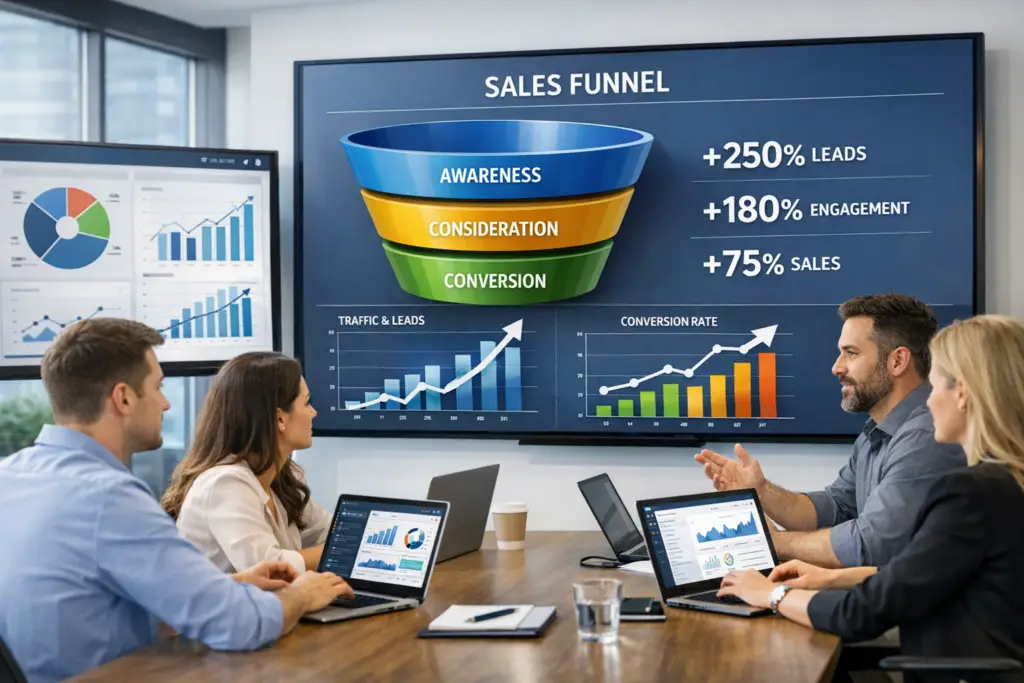
• Learn how structured sales funnels turn marketing strategy into predictable growth, improving conversions, ROI, and overall campaign performance• Discover a proven process using funnel building strategies, conversion rate optimization, and personalization to guide users from awareness to purchase• Avoid costly mistakes like overcomplicating funnels, weak messaging, and lack of tracking while building scalable lead generation systems Why Marketing Strategy and Sales Funnels Drive Results Marketing strategy is the backbone of any successful campaign, and sales funnels are what turn that strategy into measurable results. Without a clear system in place, businesses often struggle to guide potential customers from interest to action. A well-defined approach ensures that every touchpoint has a purpose and moves the user forward. This is where strong funnel building strategies begin to make a real difference. When done right, the outcome is not just more traffic, but more conversions and higher returns. Many businesses focus only on generating traffic, but the real goal is turning that traffic into paying customers. This is where conversion rate optimization plays a critical role in improving overall performance. By aligning messaging with each stage of the customer journey, businesses can avoid wasted effort and missed opportunities. Lead generation funnels help capture interest early while building trust over time. When each part of the process works together, the result is a smoother path to conversion and stronger campaign outcomes. Businesses that implement structured funnel systems consistently see better results because each stage is designed to guide users toward a specific action. Understanding key sales funnel stages allows marketers to remove guesswork and replace it with a clear plan. This structured approach improves engagement and makes it easier to identify what is working and what needs improvement. Instead of relying on chance, businesses can create predictable and scalable growth. In the end, a strong strategy combined with a well-built funnel can significantly increase both visibility and revenue. How to Build High Converting Sales Funnels with the Right Process The foundation of effective funnel building strategies starts with understanding each stage of the customer journey. Every step, from awareness to conversion, should have a clear purpose and message. By mapping out these stages, businesses can better guide users through a logical and engaging path. Sales funnel stages help ensure that no opportunity is missed along the way. When each phase is intentional, it becomes easier to turn interest into action. A major factor in improving performance is removing unnecessary steps that slow users down or create confusion. Simplifying the process allows prospects to move forward without hesitation or friction. This is where conversion rate optimization becomes essential in refining each touchpoint. Fewer distractions and clearer calls-to-action lead to stronger engagement and better outcomes. As a result, more leads transition smoothly into paying customers. Personalization is another key element that strengthens lead generation funnels and builds trust with your audience. Tailoring content based on user behavior makes each interaction feel more relevant and valuable. Businesses that apply this approach often see higher engagement and improved conversion rates. To implement this effectively, many turn to professional guidance such as digital strategy services to refine their process. When structure, simplicity, and personalization work together, the funnel becomes a powerful driver of growth. Common Mistakes To Avoid Many businesses attempt to build and manage their own funnels but overlook key steps that impact performance. These mistakes often come from a lack of structure, unclear messaging, or trying to do too much at once. Understanding these common issues can help you avoid wasted time and lost revenue. Skipping a Clear Strategy One of the most common mistakes is jumping into execution without a defined plan. This happens when businesses focus on quick wins instead of building a long-term system. Without a strategy, messaging becomes inconsistent and results are unpredictable. To prevent this, start by mapping out your funnel stages and defining clear goals for each step. A structured plan ensures every action supports your overall objectives. Overcomplicating the Funnel Many companies believe adding more pages, steps, or offers will increase conversions. In reality, this often creates confusion and causes users to drop off before completing an action. Complexity usually comes from trying to appeal to everyone at once. The solution is to simplify the journey and remove unnecessary steps that create friction. A clear and direct path leads to higher engagement and better results. Ignoring Conversion Rate Optimization Some businesses build their funnels once and never revisit them. This mistake happens when teams assume the initial setup will continue to perform without adjustments. Without ongoing optimization, small issues can reduce conversions over time. To avoid this, regularly test elements like headlines, calls-to-action, and page layouts. Continuous improvement is key to maintaining strong performance. Using Generic Messaging A lack of personalization is a major reason why funnels fail to convert. This often occurs when businesses try to use the same message for every audience segment. Generic content does not connect with users or address their specific needs. To fix this, tailor your messaging based on user behavior and intent at each stage. Personalized communication builds trust and increases the likelihood of conversion. Failing to Track and Measure Performance Another frequent error is not tracking key metrics across the funnel. This happens when businesses do not set up proper analytics or fail to review the data regularly. Without insights, it becomes impossible to know what is working and what needs improvement. To prevent this, monitor performance indicators such as conversion rates and user behavior. Data-driven decisions lead to more effective and scalable outcomes. Finalizing and Strengthening Your Sales Funnel Strategy A strong marketing strategy becomes even more powerful when supported by well-defined funnel building strategies. Each step in the process should work together to move potential customers closer to a decision. When businesses focus on aligning their messaging with user intent, results become more predictable. Sales funnel stages provide a clear framework that helps maintain consistency across campaigns. This consistency is what drives long-term growth and improved marketing performance.