

Buena Vista Creative

Branding

Branding, Digital Marketing, Uncategorized

The Contractor’s Guide to SEO That Drives Real Leads and Revenue

• Learn how SEO helps contractors capture high-intent leads, increase visibility, and drive consistent revenue without relying on paid ads • Understand the step-by-step process, including keyword research, local SEO optimization, and website performance improvements that boost rankings and conversions • Avoid common DIY mistakes and build a long-term SEO strategy that delivers steady traffic, better leads, and sustainable business growth Why SEO Is a Game-Changer for Contractors SEO for contractors is one of the most powerful ways to attract consistent, high-quality leads online. When done correctly, it connects your services with people actively searching for help. This means you are not chasing leads, but instead capturing demand that already exists. A strong contractor seo strategy allows your business to appear in front of the right audience at the right time. The result is more calls, more booked jobs, and stronger return on your marketing efforts. Most customers searching for services will choose a business that appears on the first page of search results. If your company is not there, your competitors are getting those opportunities instead. This is where local seo for contractors becomes critical, especially for service-based businesses. Showing up in top results builds trust before a customer even contacts you. With the right approach, your visibility increases and your chances of winning new work grow significantly. SEO also creates long-term value that continues to perform even when you are not actively spending on ads. Unlike short-term campaigns, a well-executed strategy builds momentum over time. Using smart contractor keyword research helps ensure you are targeting the terms your customers actually use. This leads to better traffic that is more likely to convert into paying clients. When done properly, SEO turns your website into a reliable source of ongoing business growth. How to Do SEO for Contractors the Right Way The foundation of a strong SEO approach starts with understanding what your customers are searching for. This is where contractor keyword research plays a critical role in shaping your content and service pages. By targeting the right terms, you can align your website with real demand in your area. A clear contractor seo strategy ensures each page is built around a specific service and location. This structure helps search engines understand your business and rank it for relevant searches. Local visibility is one of the most important parts of success for contractors. Your Google Business Profile must be fully optimized with accurate information, services, and consistent updates. Google uses this listing as a major ranking factor when deciding which businesses appear in local results. Strong local seo for contractors also includes gathering reviews and maintaining consistent contact details across directories. If managed properly, this step alone can drive a steady flow of calls and inquiries from nearby customers. Technical performance and user experience are just as important as keywords and listings. Websites that load quickly and are mobile-friendly tend to rank higher and convert more visitors into leads. If your site is slow or difficult to navigate, potential customers will leave before taking action. Following proven seo tips for builders, such as optimizing images and improving page speed, can make a measurable difference. For businesses looking to streamline this process, professional support like seo management can help ensure everything is implemented correctly and consistently. Common Mistakes To Avoid Many contractors attempt to handle SEO on their own but miss key steps that limit their results. Small mistakes in process or strategy can lead to low visibility and missed opportunities. Understanding these common issues can help you avoid setbacks and build a more effective approach. Targeting the Wrong Keywords This mistake often happens when businesses guess what customers are searching for instead of using real data. Without proper contractor keyword research, you may attract traffic that does not convert into leads. This leads to wasted time and poor return on effort. To prevent this, focus on search intent and choose keywords that match your services and location. Using the right terms ensures you reach people who are ready to hire. Ignoring Local SEO Optimization Many contractors overlook the importance of local seo for contractors, especially when setting up their online presence. This usually happens because they focus only on their website and ignore local listings. As a result, they miss out on nearby customers searching for immediate services. To fix this, fully optimize your Google Business Profile and keep your business information consistent everywhere. This helps improve your visibility in local search results and maps. Having a Slow or Non-Mobile-Friendly Website This issue is common when websites are built without considering user experience. A slow or poorly optimized site can cause visitors to leave before taking action. This reduces both rankings and conversions over time. To avoid this, follow seo tips for builders like optimizing images, improving load speed, and ensuring mobile responsiveness. A fast, easy-to-use site keeps visitors engaged and increases lead generation. Lack of a Clear SEO Strategy Many businesses jump into SEO without a defined contractor seo strategy, leading to inconsistent efforts. This often results in scattered content and poor performance across search engines. Without direction, it is difficult to measure progress or improve results. The solution is to create a structured plan that outlines your goals, keywords, and content approach. A clear strategy keeps your efforts focused and aligned with business growth. Expecting Immediate Results SEO is often misunderstood as a quick fix rather than a long-term investment. This leads to frustration when results do not appear instantly. In reality, SEO builds momentum over time through consistent effort. To prevent this mistake, set realistic expectations and focus on steady improvements. Patience combined with the right process will deliver stronger and more sustainable outcomes. Turning SEO Into a Long-Term Growth Engine When all parts of your SEO strategy work together, the results become consistent and predictable. Strong visibility, targeted content, and local optimization help your business show up where customers are actively searching. A well-planned contractor seo strategy ensures that each effort builds on the last.

Branding, Digital Marketing

Lead Generation Strategies That Drive Conversions and Scalable Growth

• Marketing strategy is the foundation of successful campaigns, helping businesses attract qualified leads, improve conversion rates, and increase ROI through structured planning and clear funnel alignment • High-performing systems rely on defined audiences, a structured lead generation funnel, personalized messaging, and continuous optimization to drive consistent and scalable growth • Avoiding common mistakes like poor targeting, generic messaging, and lack of optimization ensures better lead quality, lower acquisition costs, and stronger overall campaign performance Why Marketing Strategy Is the Foundation of High-Converting Campaigns Marketing strategy plays a critical role in shaping effective lead generation strategies that deliver real results. Without a clear plan, many campaigns generate attention but fail to turn that attention into revenue. Businesses often invest in tools or channels without understanding how everything connects. This leads to wasted spend and missed opportunities for growth. A strong foundation ensures every action supports a clear business goal. Many marketers struggle because they focus on short-term tactics instead of long-term direction. While inbound marketing tactics can bring traffic, they need to be guided by a well-defined strategy to be effective. When there is no structure, efforts become inconsistent and difficult to measure. This lack of direction often results in poor conversion performance and low engagement. Building a clear plan helps turn scattered efforts into a focused system that drives results. When done correctly, marketing strategy transforms how businesses approach growth and customer acquisition. Companies that use structured approaches tend to attract better prospects and improve qualified lead acquisition. This means sales teams spend less time chasing unfit leads and more time closing deals. As a result, campaigns become more efficient and profitable. The impact is not just better performance, but a stronger and more predictable path to scaling success. The Link Between Strategy, Funnels, and ROI Growth A well-defined strategy connects directly to how a business builds and manages its lead generation funnel. Each stage of the funnel should guide potential customers closer to making a decision. Without this alignment, leads may drop off before converting. This creates gaps that limit overall campaign performance. A clear funnel structure ensures that every step has purpose and direction. Businesses that align their marketing strategy with a clear funnel often see improved efficiency and reduced costs. When each stage is mapped out, it becomes easier to identify where improvements are needed. This also supports better conversion rate optimization by focusing on the areas that matter most. Instead of guessing, marketers can make informed decisions based on performance data. Over time, this leads to stronger outcomes and better use of resources. For readers focused on growth, the goal is always to increase return on investment while expanding reach. A strong strategy makes it possible to achieve both without unnecessary complexity. By connecting messaging, targeting, and funnel design, businesses create a seamless experience for their audience. This builds trust and encourages action at every stage. The result is a system that not only attracts attention but also converts it into measurable success. What Happens When Strategy Is Done Right When marketing strategy is executed properly, the difference in results becomes clear almost immediately. Campaigns become more focused, and messaging resonates more effectively with the target audience. This leads to higher engagement and stronger connections with potential customers. Over time, these improvements compound and drive consistent growth. Businesses begin to see a clear link between effort and outcome. Structured approaches also improve the quality of leads entering the pipeline. Instead of attracting a broad and unqualified audience, businesses bring in prospects who are more likely to convert. This creates a more efficient sales process and reduces wasted time. As a result, teams can focus on high-value opportunities that drive revenue. This shift is key to building a scalable and sustainable marketing system. Ultimately, the right approach to strategy creates a competitive advantage that is hard to replicate. It allows businesses to adapt, optimize, and grow with confidence. By focusing on process and execution, marketers can unlock better performance across every campaign. This includes improvements in engagement, conversions, and overall efficiency. When all elements work together, the impact on business growth can be significant. How to Build Lead Generation Strategies That Convert The process begins with a deep understanding of your target audience and what drives their decisions. Without this clarity, even the most creative campaigns will struggle to connect. Businesses need to identify pain points, motivations, and behaviors before launching any initiative. This insight allows for more precise messaging and better targeting. When done correctly, it sets the stage for strong qualified lead acquisition. A clear audience profile also helps refine inbound marketing tactics that attract the right people. Instead of casting a wide net, businesses can focus on high-intent prospects. This improves engagement and increases the likelihood of conversion. It also ensures that marketing efforts are aligned with actual customer needs. The result is a more efficient and effective approach to growth. For those looking to build a structured approach, working with experts in digital strategy can help refine targeting and execution. A guided process ensures that no critical steps are missed. This includes audience research, messaging development, and channel selection. Each element plays a role in overall performance. When aligned properly, campaigns become more predictable and scalable. Building a Funnel That Guides and Converts Once the audience is defined, the next step is creating a structured lead generation funnel. This funnel should map out every stage of the customer journey, from awareness to decision. Each step must have a clear purpose and tailored messaging that moves prospects forward. Without this structure, potential customers may lose interest or drop off. A well-built funnel keeps engagement consistent and focused. Aligning strategy with a clear funnel improves both efficiency and cost management. Businesses that take this approach often see lower acquisition costs and stronger overall performance. It also creates opportunities for better conversion rate optimization by identifying where leads are getting stuck. With this insight, marketers can make targeted improvements that drive results. Over time,

Branding, Digital Marketing, Uncategorized

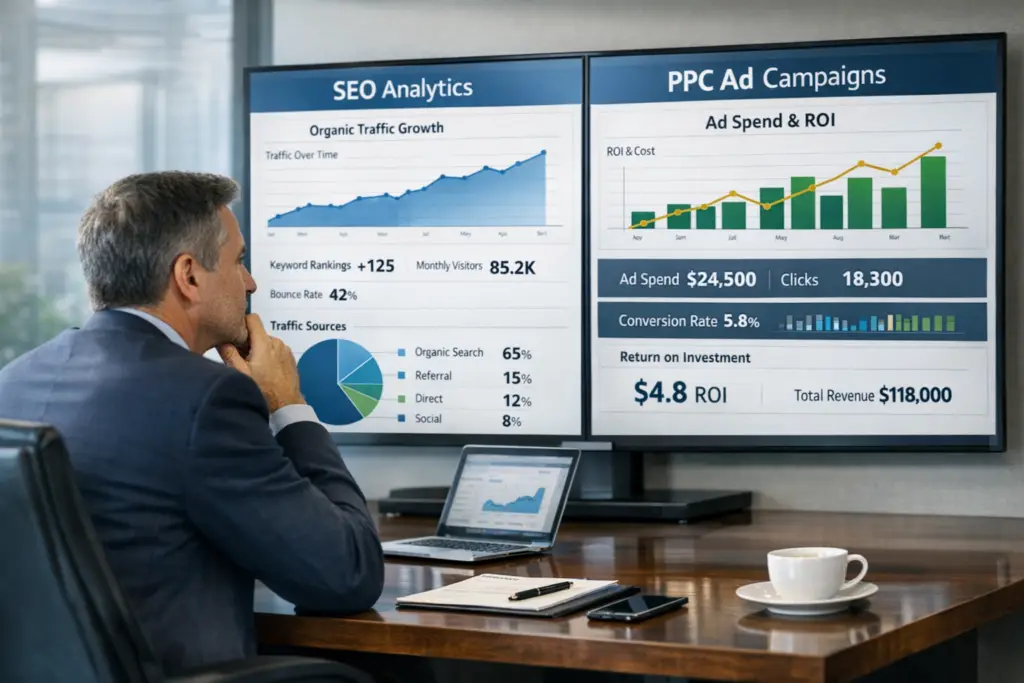
Seo vs PPC: The Smarter Way to Choose the Right Strategy for Faster Growth

• SEO builds long-term traffic and trust, while PPC delivers immediate visibility—using both strategically leads to stronger ROI and consistent growth• A structured process that aligns goals, budget, and execution helps businesses avoid wasted spend and maximize performance across SEO and paid campaigns• Common mistakes like ignoring keyword strategy, overspending on ads, or not integrating both channels can limit results and reduce overall marketing effectiveness Why SEO Plays a Critical Role in Marketing Success When businesses evaluate seo vs ppc, they often focus on quick wins instead of long-term impact. SEO remains one of the most powerful drivers of sustainable growth in digital marketing. It helps businesses show up when customers are actively searching for solutions. This creates a steady flow of high-intent traffic that can convert into leads and sales. When done right, SEO builds a strong foundation that supports every other marketing effort. A major advantage of SEO is its ability to generate consistent traffic without ongoing ad spend. Many businesses find that SEO drives over half of their total website traffic through organic search results. This level of visibility gives brands more opportunities to connect with potential customers. It also improves trust, as users often rely more on organic listings than paid ads. Understanding the seo vs ppc benefits helps businesses see why SEO is essential for long-term ROI. While SEO builds momentum over time, PPC offers immediate exposure that can complement a strong strategy. Paid ads can appear at the top of search results, giving businesses instant visibility when it matters most. This is especially useful for new campaigns or competitive keywords where ranking organically takes time. However, relying only on paid ads can quickly increase seo vs ppc cost without delivering lasting value. A balanced seo vs ppc strategy ensures that both short-term gains and long-term growth are achieved. The Right Process for Choosing Between SEO and PPC A strong marketing outcome starts with a clear and structured decision-making process. Businesses must first define their goals, whether that is fast lead generation, long-term growth, or a mix of both. This is where understanding seo vs ppc pros cons becomes critical to avoid wasted time and budget. Without a clear direction, companies often invest in the wrong channel and see limited returns. A focused approach ensures every dollar and effort is aligned with measurable outcomes. SEO requires a disciplined process that includes keyword research, content creation, and technical optimization. Each step builds on the next to improve rankings and increase organic visibility over time. Businesses that invest in a professional SEO management service often see stronger and more consistent growth. This approach creates authority in search engines and builds trust with users. When executed properly, SEO becomes a long-term asset that continues to deliver value. PPC, on the other hand, requires careful planning, targeting, and ongoing optimization to remain profitable. Businesses that manage campaigns correctly can see strong returns, often generating about two dollars in revenue for every dollar spent. However, without proper oversight, seo vs ppc cost can quickly rise without meaningful results. This is why a well-defined seo vs ppc strategy is essential for balancing spend and performance. When both channels are managed with precision, businesses can capture immediate opportunities while building future growth. Common Mistakes To Avoid Many businesses try to manage their marketing strategy on their own but overlook key steps that impact results. These mistakes often lead to wasted budget, low visibility, and missed growth opportunities. Understanding these common errors can help you build a more effective and profitable approach. Focusing Only on Short-Term Results One of the most common mistakes is prioritizing quick wins over long-term growth. This often happens when businesses rely too heavily on paid ads without investing in organic strategies. While PPC can deliver fast traffic, it stops the moment you stop spending. This creates a cycle where costs continue to rise without building lasting value. To prevent this, balance your efforts by investing in SEO to create sustainable traffic over time. Ignoring Keyword Strategy Many businesses skip proper keyword research and target broad or irrelevant search terms. This usually happens due to a lack of understanding of user intent and search behavior. As a result, content and ads fail to reach the right audience. This leads to low engagement and poor conversion rates. To avoid this, focus on targeted keywords that match what your audience is actively searching for. Underestimating SEO Effort Some businesses assume SEO is a one-time task rather than an ongoing process. This mistake often comes from expecting immediate results without consistent effort. SEO requires continuous updates, content creation, and optimization to remain effective. Without this, rankings can drop and traffic can decline. Prevent this by committing to a long-term SEO plan with regular performance tracking. Overspending Without Optimization Another frequent issue is running PPC campaigns without proper monitoring or adjustments. This happens when businesses set campaigns and leave them without reviewing performance data. Over time, this leads to higher costs and lower returns. Even though PPC can generate strong revenue, poor management reduces its effectiveness. To fix this, regularly review campaigns, adjust targeting, and optimize bids to improve results. Not Integrating SEO and PPC Many companies treat SEO and PPC as separate efforts instead of a combined strategy. This often results from a lack of planning or understanding of how both channels can support each other. When used together, they can improve visibility, data insights, and overall performance. Ignoring this connection limits your potential reach and impact. To prevent this, create a unified strategy that uses both channels to maximize results. Final Thoughts on Building a High-Performing Marketing Strategy Choosing the right approach between SEO and paid advertising comes down to understanding your business goals and resources. A clear seo vs ppc strategy helps align your efforts with both short-term wins and long-term growth. Businesses that take the time to evaluate their options often see better performance across all channels. This decision is not about picking one over the other, but

Branding, Digital Marketing, Uncategorized

Build a Growth Marketing Strategy That Drives Scalable Revenue and ROI

• A strong marketing strategy is the foundation for increasing ROI, improving targeting, and creating scalable, predictable growth across campaigns • Implementing a structured framework with data driven marketing, testing, and team alignment leads to higher conversions and better customer retention • Avoiding common mistakes like skipping strategy, ignoring data, and failing to optimize ensures long-term success and sustainable business growth Why Marketing Strategy Drives Growth and ROI The Role of Strategy in Campaign Success A strong growth marketing strategy is the backbone of any campaign that aims to scale results and improve return on investment. Without a clear direction, businesses often spend money on tactics that do not produce meaningful outcomes. This leads to wasted resources and missed opportunities to connect with the right audience. A structured approach helps guide decisions and ensures every action has a purpose. When strategy is prioritized, campaigns become more predictable and effective. Marketing strategy gives businesses the ability to focus on what truly drives growth. Instead of guessing, teams can rely on a defined growth marketing framework to guide their efforts. This allows for better planning, smarter budgeting, and improved targeting across channels. When every step is aligned with a goal, results become easier to measure and optimize. Over time, this consistency builds stronger performance and better returns. Many marketers struggle because they jump straight into execution without building a solid foundation. This often results in inconsistent messaging and poor audience engagement. A well-developed strategy eliminates confusion and keeps campaigns aligned with business goals. It also creates a roadmap for scaling success over time. The difference between average and high-performing campaigns often comes down to how well the strategy is implemented. Connecting Strategy to Measurable Growth When businesses commit to a structured approach, they begin to see clear improvements in both reach and revenue. A focus on data driven marketing allows teams to make informed decisions instead of relying on assumptions. This leads to more efficient campaigns that target the right audience at the right time. As a result, customer acquisition becomes more effective and retention improves. Companies that embrace this approach are far more likely to see long-term success. Growth-focused strategies are designed to maximize every opportunity within the customer journey. From awareness to conversion, each stage is optimized to deliver better results. This is where conversion optimization tactics play a key role in improving performance. Small changes in messaging or design can lead to noticeable increases in engagement and sales. Over time, these improvements compound and create significant gains. A strong strategy also ensures that marketing efforts are not isolated but connected across channels. This creates a seamless experience for users and strengthens brand trust. When campaigns are aligned, businesses can track performance more accurately and adjust as needed. This level of control leads to smarter decisions and better outcomes. Ultimately, the goal is to turn every interaction into a measurable opportunity for growth. Unlocking the Full Potential of Marketing Efforts The real power of marketing strategy comes from its ability to drive continuous improvement. Instead of relying on one-time efforts, businesses can build systems that evolve over time. A marketing experimentation process allows teams to test new ideas and refine what works best. This ongoing optimization is key to staying competitive in a crowded market. It also helps businesses adapt quickly to changing customer behavior. By focusing on strategy, businesses can avoid common pitfalls that limit performance. Poor targeting, unclear messaging, and lack of direction often lead to disappointing results. A clear and structured approach removes these barriers and sets campaigns up for success. It also ensures that every effort contributes to a larger goal. This alignment is essential for achieving consistent growth. When done correctly, marketing strategy has the potential to transform overall business performance. Campaigns become more efficient, audiences become more engaged, and revenue begins to scale. Companies that invest in proper planning and execution often see stronger acquisition and retention outcomes. This creates a cycle of continuous growth that builds momentum over time. The result is a marketing system that delivers both immediate impact and long-term value. How to Implement a Growth Marketing Strategy the Right Way Build a Clear Framework for Execution The first step to success is creating a structured plan that guides every marketing effort. A well-defined growth marketing framework helps teams stay focused on goals that drive real business impact. This includes identifying target audiences, mapping customer journeys, and setting clear performance metrics. Without this structure, campaigns can quickly become disorganized and ineffective. A strong foundation ensures that every action supports measurable growth. To strengthen this process, businesses should align their strategy with proven digital practices. Leveraging expert support, such as digital strategy services, can help refine direction and improve execution. This allows teams to avoid common mistakes and focus on high-impact opportunities. Clear planning also improves collaboration and accountability across departments. When everyone understands the strategy, execution becomes more efficient. Consistency is key when building and applying a framework across campaigns. Each channel and tactic should connect back to the same core objectives. This creates a unified experience for the audience and improves overall performance. With a clear system in place, businesses can scale their efforts with confidence. The result is a more predictable and sustainable approach to growth. Use Data and Testing to Drive Performance Once a framework is in place, the next step is to rely on data driven marketing to guide decisions. Data provides insights into what is working and what needs improvement. This removes guesswork and allows teams to focus on strategies that deliver results. Businesses that use data effectively often see stronger customer acquisition and retention. Over time, this leads to more efficient campaigns and better ROI. Testing plays a critical role in optimizing marketing performance. A structured marketing experimentation process allows teams to test different approaches and refine their tactics. This includes running A/B tests on ads, landing pages, and messaging. Even small adjustments can lead to meaningful improvements in engagement and conversions. Continuous testing

Branding, Digital Marketing, Uncategorized

Master Marketing Campaign Management for Higher ROI and Scalable Growth

• Strong marketing campaign management starts with a clear strategy, helping businesses avoid wasted budget, improve targeting, and increase ROI through structured planning and execution • Effective campaigns rely on a proven process that includes planning, campaign performance tracking, optimization, and multi channel campaigns to maximize reach and results • Avoiding common mistakes like poor planning, lack of tracking, and limited channels allows businesses to build scalable campaigns that drive consistent growth and long-term success Why Marketing Strategy Drives Campaign Success Effective marketing campaign management starts with a strong foundation, and that foundation is strategy. Without a clear plan, campaigns often waste budget and fail to reach the right audience. A well-defined marketing campaign strategy helps guide every decision, from messaging to channel selection. This clarity makes it easier to focus on actions that drive real business results. When done right, it leads to stronger ROI and better overall performance. Many campaigns struggle because they lack direction and consistency in execution. When goals are unclear, teams often rely on guesswork instead of proven campaign optimization techniques. This leads to missed opportunities and poor engagement across channels. By aligning strategy with business objectives, companies can create campaigns that speak directly to their target audience. The result is improved visibility, stronger engagement, and more reliable outcomes. Businesses that document and follow a clear strategy consistently achieve better results than those that do not. A structured approach removes confusion and creates a repeatable system for success. It also allows teams to integrate campaign performance tracking early in the process, making it easier to measure what works. With a solid plan in place, adjustments can be made quickly to improve outcomes. This level of control is what turns average campaigns into high-performing ones. How to Manage Marketing Campaigns Effectively with the Right Process A strong process is what turns ideas into consistent results in any campaign. It starts with clear planning, where goals, audience, and messaging are defined before any work begins. This step ensures that every part of the campaign aligns with a larger marketing campaign strategy. From there, execution becomes more focused and easier to manage across teams. When this structure is followed, it prevents confusion, delays, and wasted resources. Once a campaign is live, campaign performance tracking becomes essential for success. Monitoring key metrics allows teams to see what is working and what needs improvement in real time. Campaigns that rely on data analysis are able to improve return on investment through ongoing adjustments. This is where campaign optimization techniques play a major role in refining messaging and targeting. Businesses that apply these methods can quickly adapt and improve results instead of waiting until the campaign ends. Expanding into multi channel campaigns helps increase reach and engagement across different platforms. By connecting with audiences on multiple touchpoints, brands can build stronger awareness and trust. This approach is far more effective than relying on a single channel to deliver results. For businesses looking to strengthen their approach, working with a digital strategy team can help ensure every channel works together seamlessly. When all parts of the process are aligned, campaigns become more powerful and deliver better outcomes. Common Mistakes To Avoid Many businesses try to manage campaigns on their own but run into avoidable issues that hurt performance. These mistakes often come from a lack of structure, unclear goals, or limited experience with proven methods. Understanding these common errors can help you fix gaps in your process and improve results faster. Skipping a Clear Marketing Campaign Strategy One of the most common mistakes is launching campaigns without a defined plan. This usually happens when businesses rush to get results without taking time to map out goals, audience, and messaging. Without a clear direction, efforts become scattered and inconsistent. This leads to poor engagement and wasted budget. To prevent this, always document your strategy before launching any campaign. Ignoring Campaign Performance Tracking Many teams fail to track performance consistently, which makes it hard to know what is working. This often happens because tracking tools seem complex or are set up incorrectly. Without proper data, decisions are based on guesswork instead of real insights. This can quickly reduce return on investment and limit growth. To avoid this, set up clear tracking systems and review metrics regularly. Relying on a Single Marketing Channel Another frequent mistake is focusing all efforts on just one platform. Businesses often do this because they are most comfortable with a single channel or have seen short-term success there. However, this limits reach and reduces opportunities for engagement. Multi channel campaigns allow brands to connect with a wider audience and build stronger awareness. Expanding across platforms helps create a more balanced and effective campaign. Failing to Optimize Campaigns Over Time Some businesses launch campaigns and leave them unchanged, expecting consistent results. This happens when teams assume the initial setup is enough to carry performance long term. In reality, markets shift and audience behavior changes, which impacts results. Without using campaign optimization techniques, performance can decline quickly. Regular updates and adjustments help keep campaigns relevant and effective. Poor Communication and Execution Disorganized teams often struggle to execute campaigns properly. This usually comes from unclear roles, missed deadlines, or lack of coordination. When communication breaks down, even strong strategies can fail during execution. This results in delays, inconsistent messaging, and missed opportunities. To prevent this, create a clear workflow and ensure everyone understands their responsibilities. Bringing It All Together for Stronger Campaign Results When strategy, execution, and analysis work together, campaigns become far more effective. A clear marketing campaign strategy ensures that every decision supports a larger goal. Combined with campaign performance tracking, businesses can see exactly where improvements are needed. This allows teams to make smarter adjustments that drive better outcomes over time. The result is a system that consistently produces stronger returns and greater visibility. Many campaigns fail because they skip key steps like planning, tracking, or using the right channels. Without these elements, even the best ideas can fall

Branding, Digital Marketing, Uncategorized

Creative Marketing Strategies That Make Your Brand Impossible to Ignore

• Learn how strong branding combined with creative marketing increases visibility, builds trust, and can boost revenue through consistent messaging • Follow a proven process to stand out, including defining brand identity, using storytelling, and executing campaigns with clear strategy and optimization • Avoid common DIY mistakes like inconsistent messaging, trend-chasing, and lack of audience connection to improve engagement, loyalty, and ROI Why Branding and Creative Marketing Drive Standout Results Branding is the backbone of any successful campaign, and creative marketing is what helps that brand get noticed in a crowded space. When businesses rely on generic messaging, they often struggle to capture attention or drive meaningful engagement. Strong branding paired with fresh, creative branding ideas allows a company to rise above competitors. This approach makes your message clearer, more memorable, and easier to connect with. For businesses focused on growth, this directly impacts both visibility and return on investment. A well-defined brand that stays consistent across every platform builds trust and recognition over time. When this consistency is supported by strong brand differentiation strategies, it becomes easier for customers to understand what sets you apart. Research shows that consistent brand presentation across all platforms can increase revenue by up to 23%. This means every touchpoint, from social media to ads, should feel unified and intentional. When done right, your branding becomes a powerful driver of long-term financial results. Attention is one of the most valuable assets in marketing, and standing out requires more than just being seen. Audiences are far more likely to remember brands that use unique and engaging messaging instead of blending in with standard marketing campaign ideas. This is where brand storytelling techniques play a key role in making your message stick. When people remember your brand, they are more likely to return and engage again. Over time, this increased recall leads to stronger conversions and deeper customer relationships. How to Use Creative Marketing to Stand Out with the Right Process The first step in using creative marketing effectively is building a clear and consistent brand identity. This means defining your voice, values, and target audience before developing any campaigns. Without this foundation, even the most exciting ideas can feel scattered and ineffective. Strong brand differentiation strategies begin with knowing exactly what makes your business unique. When your identity is clear, every creative decision becomes more focused and impactful. Once your brand foundation is set, the next step is developing creative branding ideas that connect with your audience. This is where brand storytelling techniques come into play, helping you create emotional connections that go beyond simple promotion. Emotional storytelling has been shown to significantly improve customer engagement and build long-term loyalty. Instead of pushing generic messages, your campaigns should reflect real experiences, values, and relatable narratives. If you need guidance shaping this process, working with experts in branding services can help align your ideas with proven strategy. The final step is execution and ongoing optimization across all channels. Your marketing campaign ideas should remain consistent while still allowing room for creative expression. This balance ensures your brand stays recognizable while continuing to evolve and stay relevant. Tracking performance helps you understand what resonates and where adjustments are needed. Over time, this structured approach leads to stronger engagement, better results, and a higher return on your marketing efforts. Common Mistakes To Avoid Many businesses attempt to handle branding and marketing on their own but run into avoidable challenges. These mistakes often come from a lack of structure, unclear strategy, or trying to move too quickly without a solid foundation. Understanding these common errors can help you avoid wasted time, missed opportunities, and weak results. Lack of a Clear Brand Identity This mistake happens when businesses jump into campaigns without defining their voice, audience, or positioning. It often comes from the urge to start marketing quickly without doing the groundwork. As a result, messaging becomes inconsistent and confusing to customers. To prevent this, take time to clearly define your brand before launching any campaigns. A strong foundation ensures every marketing effort feels aligned and intentional. Inconsistent Messaging Across Channels Many companies create different messages for each platform, thinking it will improve engagement. Instead, this creates confusion and weakens brand recognition over time. Customers may struggle to understand what the brand truly stands for. To avoid this, maintain consistent messaging and visuals across all platforms while still adapting format as needed. Consistency builds trust and makes your brand easier to remember. Focusing on Trends Instead of Strategy It is common for businesses to chase popular trends without considering if they align with their brand. This usually happens because trends seem like a quick way to gain attention. However, this approach often leads to short-term engagement with no lasting impact. To prevent this, focus on strategies that support your brand identity and long-term goals. Creative efforts should always serve a purpose beyond immediate visibility. Ignoring Audience Connection Some businesses focus too heavily on selling and not enough on building relationships. This happens when marketing is treated as promotion instead of communication. Without a connection, even the most creative campaigns can fall flat. To fix this, use storytelling and messaging that speaks directly to your audience’s needs and emotions. Building trust leads to stronger engagement and loyalty over time. Skipping Performance Tracking and Optimization A common mistake is launching campaigns and never reviewing how they perform. This often happens due to lack of tools, time, or understanding of analytics. Without tracking, businesses miss opportunities to improve and refine their efforts. To avoid this, regularly review performance data and adjust your strategy based on what works. Continuous improvement is key to achieving better results and higher returns. Bringing It All Together for Long-Term Branding Success Strong branding combined with thoughtful creative execution is what allows businesses to truly stand out in competitive markets. When strategy, consistency, and innovation work together, the results become much more predictable and scalable. Creative marketing plays a key role in making sure your message is not

Branding, Digital Marketing, Uncategorized

Build Marketing Campaigns That Convert: A Proven Framework for Measurable Growth

• A clear marketing campaign strategy is the foundation of success, helping businesses align goals, target the right audience, and improve ROI through structured planning and execution. • Following a proven campaign planning process—defining audiences, maintaining consistent messaging, and tracking campaign performance metrics—leads to higher engagement, stronger brand trust, and scalable growth. • Avoiding common mistakes like poor planning, unclear targeting, inconsistent messaging, and lack of data tracking ensures campaigns perform efficiently and deliver measurable, long-term results. Why Marketing Strategy Is the Foundation of Success Marketing campaigns often fail not because of poor effort, but because there is no clear marketing campaign strategy behind them. Many businesses rush into execution without defining goals, messaging, or direction. This leads to scattered efforts that do not connect with the right audience. As a result, budgets get wasted and results remain unpredictable. Without a structured approach, even the most creative ideas struggle to deliver real impact. A strong campaign planning process creates alignment between business goals and execution. When every step is documented, teams can focus on actions that drive measurable outcomes. Businesses that take the time to map out their strategy are more likely to reach their campaign goals. This approach reduces guesswork and improves overall efficiency. It also makes it easier to track campaign performance metrics and adjust when needed. When done correctly, a well-built strategy can significantly increase both visibility and return on investment. Target audience marketing ensures that messages reach the people most likely to engage and convert. This leads to stronger brand positioning and more consistent results over time. Instead of hoping for success, businesses can create repeatable systems that scale. The difference between average and high-performing efforts often comes down to having the right strategy in place. The Proper Process for Building Effective Campaigns The first step in a strong campaign planning process is setting clear goals and defining who you want to reach. Without this clarity, efforts become scattered and results are difficult to measure. Target audience marketing allows businesses to focus on the people most likely to engage. Campaigns that speak directly to a defined audience consistently perform better and drive higher conversions. This step eliminates wasted spend and ensures that every action supports a specific outcome. Once the audience and goals are defined, the next step is building a consistent message across all channels. A clear marketing campaign strategy ensures that your voice, tone, and value proposition stay aligned. When messaging is inconsistent, it creates confusion and weakens trust with your audience. Consistency across platforms strengthens brand recognition and helps customers feel confident in your business. For a deeper look at aligning your messaging and channels, explore digital strategy services. The final step is execution combined with ongoing measurement and optimization. Tracking campaign performance metrics helps identify what is working and what needs adjustment. This allows businesses to make informed decisions rather than relying on assumptions. Continuous improvement leads to better efficiency and stronger results over time. By following a structured process, businesses can turn average efforts into high-performing campaigns that deliver real growth. Common Mistakes To Avoid Many businesses try to handle their strategy and execution without fully understanding the process. This often leads to avoidable errors that reduce performance and waste resources. Knowing these common mistakes can help you build a stronger and more effective approach from the start. Skipping the Planning Phase One of the most common mistakes is jumping straight into execution without a clear campaign planning process. This usually happens when teams feel pressure to launch quickly or chase trends. Without a plan, messaging becomes inconsistent and results are difficult to measure. This leads to wasted time and budget on efforts that do not align with business goals. To prevent this, always define clear objectives, timelines, and strategies before launching any campaign. Not Defining a Target Audience Many businesses try to reach everyone instead of focusing on a specific group. This happens because they believe a wider reach will bring better results. In reality, target audience marketing is what drives higher engagement and conversions. When messaging is too broad, it fails to connect with anyone in a meaningful way. To avoid this, clearly define your audience based on needs, behaviors, and demographics before creating content. Inconsistent Messaging Across Channels Another frequent error is delivering different messages on different platforms. This often happens when multiple teams handle marketing without a unified marketing campaign strategy. Inconsistent messaging confuses potential customers and weakens brand trust. It also reduces the overall impact of your efforts across channels. To fix this, create clear brand guidelines and ensure all communication stays aligned. Ignoring Campaign Performance Metrics Some businesses launch campaigns and fail to track how they perform. This usually comes from a lack of understanding of campaign performance metrics or not having the right tools in place. Without data, it is impossible to know what is working and what needs improvement. This results in repeated mistakes and missed opportunities for growth. To prevent this, regularly monitor key metrics and adjust your strategy based on real insights. Relying on Guesswork Instead of Strategy A major mistake is making decisions based on assumptions rather than data and planning. This often happens when there is no documented process guiding the campaign. Guesswork leads to inconsistent results and makes it difficult to scale success. Over time, this approach becomes costly and inefficient. To avoid this, build a structured strategy that is backed by research, data, and proven methods. Bringing It All Together for Long-Term Success Successful execution comes from combining strategy, targeting, and messaging into one clear direction. A strong marketing campaign strategy ensures that every action supports a larger business goal. When these elements work together, results become more predictable and scalable. Skipping steps in the campaign planning process often leads to inconsistent performance and missed opportunities. Businesses that stay disciplined in their approach are more likely to see steady growth. Using a documented process allows teams to repeat what works and improve over time. When strategies

Branding, Digital Marketing, Uncategorized

Answer Engine Optimization: The Process to Capture AI-Driven Search Visibility

• Answer engine optimization helps your content appear in direct answers, increasing visibility, trust, and ROI without relying only on clicks • A strong AEO strategy uses clear structure, natural language, and schema markup to improve answer engine ranking across AI and voice search • Avoid common mistakes like poor formatting and inconsistent updates to ensure long-term growth, better engagement, and competitive search performance Why Answer Engine Optimization Is Critical for Marketing Success Answer engine optimization is changing how brands show up in search results and how users find information online. Instead of clicking through multiple links, users now expect quick, direct answers. This shift means businesses must rethink their AEO strategy to stay visible. A large share of search queries are now answered directly on the results page without a user clicking through to a website. If your content is not built to meet this demand, your visibility and potential ROI can drop quickly. When businesses learn how to optimize for AI search, they position themselves to appear in featured answers, voice responses, and AI-generated results. These placements often sit above traditional listings, giving brands a powerful edge in exposure. Showing up in these spaces builds trust because users see your content as a direct solution. This visibility can also improve answer engine ranking, helping your content appear more often for relevant queries. The result is not just more traffic, but higher-quality engagement from users ready to act. The impact on marketing performance can be significant when this process is done correctly. Strong visibility leads to better brand recognition and more opportunities to convert users. As competition increases, structured data SEO and clear content formatting become key advantages. Businesses that adapt early can capture attention before others catch up. In a space where users value speed and clarity, delivering the right answer at the right time can drive measurable growth. How to Optimize for Answer Engine Optimization the Right Way The foundation of a strong AEO strategy starts with creating content that answers questions clearly and quickly. Each page should focus on a specific query and deliver a direct response within the first few lines. Structuring content with headings, short paragraphs, and scannable sections makes it easier for AI systems to understand. Content that uses clear structure, concise answers, and schema markup is more likely to be selected for direct answers. This is where structured data SEO becomes essential for improving visibility. Writing in a natural, conversational tone is another key step when you optimize for AI search. People use full questions when speaking to voice assistants, and your content should reflect that behavior. Voice assistants and AI search tools prioritize content that directly answers questions in simple, natural language. This means avoiding overly complex wording and focusing on clarity. A well-written response increases your chances of improving answer engine ranking across multiple platforms. Consistency in execution is what separates average results from strong performance. Implementing schema markup, refining answer-focused sections, and aligning content with user intent should be part of a repeatable process. Businesses that invest in professional support, such as SEO management services, often see faster and more reliable gains. This approach helps avoid gaps that can limit visibility in answer-driven results. Over time, a structured and intentional process leads to stronger placement and sustained growth. Common Mistakes To Avoid Many businesses try to implement these strategies on their own but miss key steps that limit their results. Small mistakes in structure, content, or consistency can prevent your pages from being selected by AI systems. Understanding these common issues can help you avoid wasted time and improve performance faster. Focusing Only on Traditional SEO One of the most common mistakes is relying only on traditional SEO tactics without adapting to answer-focused content. This happens because many teams are used to optimizing for rankings rather than direct answers. As a result, their content may rank but never gets featured in AI-driven responses. To prevent this, shift your focus toward answering specific questions clearly and early in your content. This helps align your pages with how modern search systems select information. Writing Without Clear Structure Another frequent issue is publishing content that lacks proper formatting and organization. This often happens when businesses prioritize length over clarity. Without headings, concise answers, and logical flow, search engines struggle to extract useful information. To fix this, break content into clear sections with direct responses and easy-to-scan formatting. A well-structured page improves both user experience and visibility. Ignoring Natural Language and User Intent Many companies write in overly technical or formal language that does not match how users ask questions. This mistake usually comes from trying to sound authoritative instead of being helpful. AI systems favor content that mirrors real conversations and delivers simple answers. To avoid this, write in a natural tone and focus on how your audience actually speaks and searches. Matching user intent increases your chances of being selected for voice and AI results. Skipping Schema Markup Some businesses overlook the technical side of optimization, especially structured data. This often happens due to a lack of technical knowledge or resources. Without schema markup, search engines have less context about your content and may skip over it. Implementing structured data helps systems better understand and categorize your information. This increases the likelihood of your content being used in direct answers. Inconsistent Optimization Efforts A final mistake is treating optimization as a one-time task instead of an ongoing process. Many teams publish content and then fail to update or refine it over time. This leads to missed opportunities as search behavior and algorithms continue to evolve. To prevent this, create a repeatable process for reviewing and improving your content regularly. Consistency ensures your strategy continues to deliver strong results. Bringing It All Together for Stronger AEO Results Building a strong presence in search today requires more than just ranking on a results page. Businesses must focus on becoming the source that delivers the best direct answer to users. This is where

Branding, Digital Marketing, Uncategorized

Build a Customer Acquisition Strategy That Drives Scalable Growth

• A clear marketing strategy creates consistent growth by aligning the right audience, messaging, and customer acquisition channels to improve ROI and reduce wasted spend • Building an effective system requires defined targeting, a strong lead generation strategy, and conversion funnel optimization to turn traffic into measurable results • Avoiding common mistakes like poor audience research, lack of tracking, and unfocused channels helps lower customer acquisition cost and drive scalable growth Why Marketing Strategy Drives Customer Acquisition Success A strong customer acquisition strategy is the backbone of any successful marketing campaign. Without a clear plan, businesses often rely on random tactics that fail to produce consistent results. Marketing strategy provides direction, helping teams focus on the right audience and the right message. When paired with the right customer acquisition channels, it becomes easier to generate steady growth. This approach allows businesses to move from guesswork to predictable performance. Many companies struggle with inconsistent results because they lack a structured approach to attracting new customers. Businesses that document their strategy tend to see higher conversion rates and more reliable growth over time. This is where a clear lead generation strategy plays a critical role in guiding prospects through the journey. Instead of chasing short-term wins, a defined process builds long-term momentum. As a result, marketing efforts become more efficient and easier to scale. Another common challenge is managing rising costs while trying to grow a customer base. Acquiring new customers is often more expensive than keeping existing ones, which makes efficiency a top priority. Without proper conversion funnel optimization, businesses may lose valuable leads before they convert. This leads to higher customer acquisition cost and lower overall returns. A well-structured strategy helps control spending while improving the impact of every campaign. How to Build a Customer Acquisition Strategy That Works The first step in building an effective approach is defining a clear and specific target audience. Businesses need to understand who they are trying to reach, what problems they face, and how they make decisions. This insight helps shape messaging that connects and drives action. When customer acquisition channels are aligned with a well-defined audience, the quality of leads improves significantly. Companies that take this step seriously often see stronger return on investment and more meaningful engagement. After identifying the audience, the next step is choosing the right mix of channels and building a structured funnel. Each platform should serve a clear purpose, whether it is awareness, consideration, or conversion. A strong lead generation strategy ensures that potential customers are consistently entering the funnel. From there, conversion funnel optimization helps guide users smoothly toward taking action. Businesses looking to refine this process can explore digital strategy services to strengthen their overall approach. The final step is documenting the process and committing to ongoing testing and improvement. A documented plan keeps teams aligned and ensures that every effort supports the same goals. Tracking performance across campaigns makes it easier to identify what is working and what needs adjustment. Over time, this reduces wasted spend and lowers customer acquisition cost. Continuous refinement turns a basic plan into a high-performing growth system. Common Mistakes To Avoid Many businesses try to build their own marketing systems but run into avoidable problems along the way. These mistakes often come from a lack of structure, unclear goals, or focusing on the wrong priorities. Understanding these common errors can help you avoid wasted time, budget, and missed opportunities. Skipping Audience Research One of the most common mistakes is failing to clearly define a target audience before launching campaigns. This usually happens when businesses assume they already know their customers without validating that information. As a result, messaging becomes too broad and fails to connect with the right people. This leads to low engagement and poor-quality leads. To prevent this, invest time in researching customer behavior, preferences, and pain points before choosing your marketing approach. Using Too Many Customer Acquisition Channels Many companies try to be everywhere at once, thinking it will increase visibility and results. This often leads to stretched resources and underperforming campaigns across multiple platforms. Without focus, it becomes difficult to track what is actually working. Spreading efforts too thin reduces overall effectiveness and slows growth. Instead, focus on a few high-performing customer acquisition channels and optimize them before expanding further. Ignoring Conversion Funnel Optimization Another frequent issue is putting too much emphasis on generating traffic without improving the conversion process. Businesses may successfully attract visitors but fail to turn them into customers. This happens when there is no clear path from interest to action. Poor funnel design can cause users to drop off before completing a purchase or inquiry. To fix this, regularly review and improve each stage of your funnel to increase conversions. Not Tracking Customer Acquisition Cost Some businesses overlook the importance of measuring how much it costs to acquire each customer. This usually happens when there is no system in place to track performance data. Without this insight, companies may overspend on campaigns that are not profitable. Over time, this can limit growth and reduce overall return on investment. Prevent this by consistently monitoring customer acquisition cost and adjusting strategies based on performance. Lack of a Documented Lead Generation Strategy Operating without a clear and documented process is a major reason why many DIY efforts fail. Teams may rely on guesswork or inconsistent tactics that change from campaign to campaign. This creates confusion and makes it difficult to scale results. Without a defined lead generation strategy, growth becomes unpredictable. The best way to avoid this is to document your approach, test it regularly, and refine it based on real data. Strengthening and Scaling Your Customer Acquisition Strategy Once a solid foundation is in place, the next step is to focus on consistency and growth. Businesses that follow a structured process can expand their reach without losing efficiency. By refining customer acquisition channels, companies can reach new audiences while maintaining strong performance. This helps create a steady flow of qualified leads over

Branding, Digital Marketing, Uncategorized

Keyword Planning That Drives ROI: Build a Strategy That Actually Ranks

• Keyword planning connects your content to real search behavior, driving targeted traffic, higher engagement, and stronger ROI from SEO efforts • A proven process includes search intent analysis, a structured keyword research process, and keyword clustering to improve rankings across multiple terms • Avoid common mistakes like ignoring intent, skipping research, and failing to update your strategy to build consistent, long-term SEO growth Why Keyword Planning Is the Backbone of SEO Success The Role of Search in Modern Marketing Keyword planning is the foundation of any successful SEO campaign because it connects your content to what people are actively searching for. Without a clear plan, even the best content can go unseen and fail to deliver results. Most online experiences begin with a search engine, which means your visibility depends on how well you align with search behavior. A strong seo keyword strategy ensures that your content appears in front of the right audience at the right time. When done correctly, this process turns search engines into a consistent source of traffic and growth. How Proper Targeting Drives ROI When you take the time to follow a structured keyword research process, your marketing efforts become more focused and effective. Instead of attracting random visitors, you bring in users who are already interested in your offer. This leads to higher engagement, better conversion rates, and stronger returns on your investment. A well-planned approach allows you to prioritize keywords that balance opportunity with competition. The result is a campaign that not only drives traffic but also delivers measurable business outcomes. Why Intent and Specificity Matter Not all search terms deliver the same value, which is why search intent analysis plays a key role in planning. Users searching with specific phrases are often closer to making a decision, which makes them more valuable to target. Pages that focus on long-tail keywords tend to perform better because they match detailed user needs. This level of precision helps you create content that answers real questions and solves real problems. By understanding intent and refining your targeting, you set the stage for stronger performance across your entire SEO effort. How to Do Keyword Planning for SEO the Right Way Start with Audience Understanding and Intent The first step in building an effective strategy is understanding your audience and what they are searching for. This requires a clear focus on search intent analysis so you can identify the real problems users want to solve. When you know what your audience needs, you can align your content to meet those expectations. This step ensures that your efforts are not wasted on irrelevant traffic that will never convert. A strong foundation here makes every other part of your SEO work more effective. Follow a Structured Keyword Research Process A consistent keyword research process helps you uncover the terms that offer the best opportunities for growth. You should evaluate keywords based on relevance, competition, and their ability to drive meaningful traffic. This allows you to build a balanced seo keyword strategy that targets both quick wins and long-term gains. By organizing your findings, you create a roadmap that guides your content creation efforts. If you want expert support in executing this process, consider exploring seo management services to streamline your results. Organize Keywords into Strategic Clusters Once you have your keyword list, the next step is grouping them into logical topics using keyword clustering. This approach allows you to create content that covers a subject in depth rather than targeting single terms in isolation. Proper clustering helps search engines better understand how your content is connected and why it is relevant. As a result, your pages can rank for multiple related queries instead of just one. This structure strengthens your authority and improves your chances of consistent visibility across search results. Common Mistakes To Avoid Many businesses try to handle SEO on their own but overlook key steps that impact performance. These mistakes often come from a lack of structure, unclear goals, or misunderstanding how search works. By identifying these issues early, you can avoid wasted time and improve your results. Targeting Keywords Without Understanding Intent A common mistake is choosing keywords based only on search volume without considering what the user actually wants. This happens because many people skip proper search intent analysis and focus only on traffic potential. As a result, they attract visitors who are not ready to engage or convert. To prevent this, always evaluate why someone is searching for a term before targeting it. Align your content with the user’s goal to ensure better engagement and outcomes. Skipping a Structured Keyword Research Process Many DIY efforts fail because there is no clear keyword research process in place. People often pick keywords randomly or rely on guesswork instead of data. This leads to inconsistent results and missed opportunities. The best way to avoid this is by using a repeatable system that evaluates relevance, competition, and value. A structured approach ensures that every keyword you target supports your overall goals. Ignoring Long-Tail Keyword Opportunities Some businesses focus only on broad, high-competition terms and ignore more specific searches. This mistake happens because short keywords seem more attractive due to higher search volume. However, these terms are harder to rank for and often bring less qualified traffic. Long-tail keywords, on the other hand, match more specific user needs and tend to convert better. Including them in your strategy helps you capture high-intent users and improve performance. Failing to Use Keyword Clustering Another frequent issue is treating each keyword as a separate effort instead of grouping them into topics. This happens when there is no understanding of keyword clustering and how it improves content structure. Without clustering, content becomes scattered and less effective in search rankings. To fix this, organize related keywords into groups and build content around those themes. This helps search engines understand your content and improves your chances of ranking for multiple terms. Not Updating or Refining Your Strategy Many companies treat SEO as a

Welcome to Buena Vista Creative                                                                                                                Miami’s Digital Growth Agency                                                                                                                      Where Bold Branding Meets Data-Driven Results for South Florida Businesses

Scroll to Top