
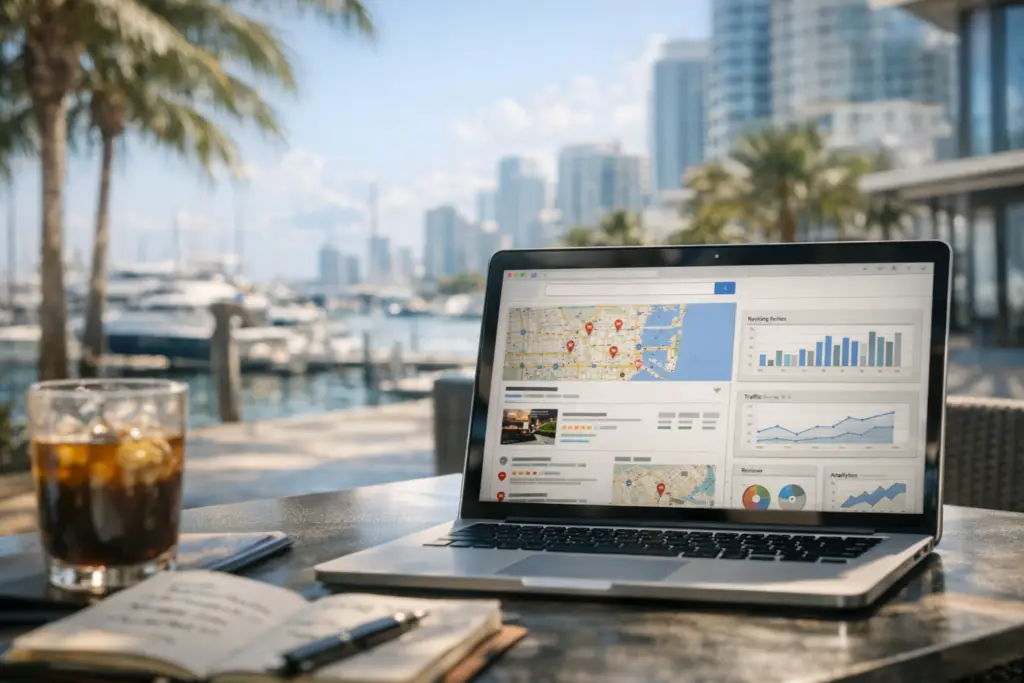
Google Maps SEO Strategy: How to Rank Locally
Google Maps SEO Strategy: How to Rank Locally
Executive Summary
If you run a local business, Google Maps is not just another place your name appears. It is often the first place people look when they are ready to call, visit, or book. That makes a real google maps seo strategy one of the clearest paths between being searched and being chosen.
This is where most local businesses get it wrong. They claim a Google Business Profile, add a few photos, and assume the job is done. On paper this works. In reality, it doesn’t. Being listed is not the same as being visible, and being visible is not the same as being competitive.
For small businesses, local rankings directly affect lead flow. If your competitors show up first, they get the call first. It is that simple. The businesses that understand this build local visibility on purpose, while everyone else keeps guessing why calls are inconsistent.
A strong google maps seo strategy helps you improve three things that matter most: relevance, trust, and local authority. When those signals are aligned, your business has a better chance of showing up in the map pack for the searches that actually lead to revenue.
- More visibility in high-intent local searches
- More calls, direction requests, and website visits
- Less dependence on paid ads for every lead
- Stronger trust signals compared to nearby competitors
- A clearer path from search to conversion
What Good Looks Like
Good local ranking performance is not random. It usually comes from a business that has done the basics well and then stayed consistent over time. Their profile is complete, their business information matches across the web, their reviews are active, and their website supports their local relevance instead of working against it.
This is where things start to separate. A weak profile can still exist for years without producing results. A strong one gives Google enough confidence to place that business in front of people searching nearby. That confidence is built through structure, not luck.
For example, a Miami med spa may have strong services and an active social presence, but still miss out on local demand if it does not appear for searches like “botox Miami” or “med spa near me.” The issue is not quality. The issue is discoverability at the decision stage. The same is true for roofers, dentists, law firms, and nearly every service business tied to local intent.
What good actually looks like is simple to define, even if it takes work to build. Your business shows up more often, earns more engagement from the right searches, and creates a more predictable local lead stream.
- Your Google Business Profile is fully built out and actively maintained
- Your primary and secondary categories are aligned with your actual services
- Your name, address, and phone number are consistent everywhere they appear
- Your reviews are recent, relevant, and steadily growing
- Your website supports local intent with service and location relevance
- Your local rankings improve for the terms people actually use before buying
Implementation Framework
A real google maps seo strategy needs more than setup. It needs a framework that helps Google understand what you do, where you do it, and why your business is trustworthy enough to rank. This is where local rankings stop being luck and start being structure.
Most companies either overcomplicate local SEO or reduce it to a checklist with no strategy behind it. Both approaches create problems. If the pieces do not support each other, rankings stay flat and the business keeps wondering why less qualified competitors show up first.
The smartest approach is to focus on the signals that consistently affect local visibility. Not every factor carries equal weight, but together they shape how Google interprets your business in a local market.
Here is the framework that matters most.
- Google Business Profile optimization: Complete every core field, choose the right categories, define service areas, keep hours accurate, add real business photos, and keep the profile active. This is your local storefront in search.
- Review strategy: Build a consistent flow of genuine reviews and respond to them. Reviews do more than build trust with customers. They also help reinforce relevance and activity signals.
- NAP consistency: Your business name, address, and phone number should match across directories, listings, and citations. This is one of the simplest areas to fix and one of the most common places businesses create confusion.
- Website-local alignment: Your website should clearly support your local presence with service pages, location relevance, crawlable business information, and content tied to actual search demand. A Google profile without website support is often weaker than business owners think.
- Local citations and directory presence: Trusted mentions across relevant directories help validate your business information. Low-quality spammy listings can do more harm than good, so the focus should stay on accuracy and quality.
- Behavior and engagement signals: Calls, clicks, direction requests, and interactions can reflect the strength of your local presence. Strong visibility plus strong engagement often reinforces performance over time.
- Ongoing maintenance: Categories change, competitors improve, and search behavior shifts. Local SEO is not a one-time fix. It needs monitoring, refinement, and regular upkeep.
Operational Checklist
Many businesses know they should improve local rankings, but they do not know where to start. That leads to scattered effort. One week they ask for reviews, the next they update a photo, and after that nothing happens for months. Inconsistent action creates inconsistent results.
This is where most companies get it wrong. They do not turn strategy into operations. A working google maps seo strategy needs repeatable actions that keep the profile, website, and local signals aligned over time.
Use this checklist as a practical operating baseline.
- Claim and verify your Google Business Profile
- Use the exact correct business name, address, and phone number
- Select the best primary category and relevant secondary categories
- Write a clear business description based on real services and geography
- List all core services and keep them current
- Add high-quality, real photos of the business, team, work, or location
- Keep business hours accurate, including holiday updates
- Collect reviews regularly from real customers
- Respond to every review in a professional and timely way
- Make sure your website includes local service pages and clear contact details
- Audit directory listings for citation consistency
- Remove duplicates or incorrect listings where possible
- Monitor profile insights and local ranking trends
- Review competitor profiles to spot category, review, and content gaps
- Update the profile regularly instead of treating it like a static listing
KPIs To Track
If you do not track the right metrics, local SEO can feel vague. Rankings may improve without real business impact, or traffic may increase without producing leads. The goal is not to collect vanity numbers. The goal is to connect local visibility to actual customer action.
On paper, profile views can look promising. In reality, they mean very little if calls and conversions do not follow. This is where tracking helps separate motion from progress.
For local businesses, the best KPIs sit at the intersection of visibility, engagement, and outcomes.
- Map pack rankings: Track visibility for your core local search terms
- Google Business Profile views: Measure discovery volume over time
- Calls from profile: Track call growth tied to local search presence
- Website clicks from profile: Measure how often users move from Maps to your site
- Direction requests: Especially useful for businesses with physical foot traffic
- Review volume and review velocity: Monitor both total reviews and the pace of new ones
- Average review rating: Track trust and perception, not just quantity
- Organic local traffic: Measure search-driven visits to local service and location pages
- Lead conversions: Track form fills, booked calls, or appointment requests from local traffic
- Cost per lead pressure: Watch whether stronger local visibility reduces dependence on paid channels like a ppc agency miami campaign would normally support
Common Failure Points
Most local SEO problems are not mysterious. They come from a handful of repeated mistakes that quietly suppress rankings. Businesses often blame competition, but the real issue is usually weak execution across the signals Google uses to evaluate local relevance and trust.
This is where things break. A business can have a decent website, solid service, and a good reputation offline, yet still underperform in Maps because the local signals are fragmented or neglected. That gap gets expensive over time.
If you want to know why rankings stall, start here.
- Incomplete Google Business Profile: Missing categories, services, hours, or business details weaken relevance
- Inconsistent business information: Different phone numbers, addresses, or business names across listings create trust issues
- Weak review activity: Not enough reviews, no recent reviews, or no responses can reduce both trust and performance
- No local website support: A profile without strong service and location relevance on the site often underperforms
- Wrong category choices: If your primary category is off, the profile may rank for the wrong intent or not rank well at all
- Set-it-and-forget-it behavior: Local rankings need maintenance, not one-time setup
- Overreliance on referrals or paid ads: This hides the local SEO gap instead of fixing it
- Chasing shortcuts: Spammy listings, fake reviews, or manipulative tactics may create short-term movement but often lead to long-term risk
For example, a roofing company may spend heavily on ads because referrals alone are not enough. But if it still does not appear in the map pack for emergency local searches, every missed ranking becomes another paid lead it has to buy. That is not sustainable growth. That is patching over a local visibility problem.
The same pattern shows up across industries. Businesses look for a digital fix somewhere else while the highest-intent local demand keeps slipping away inside Google Maps.
FAQs
Most business owners do not need a lecture on local SEO. They need clear answers to the questions that affect visibility, cost, and results. That is especially true for small businesses trying to understand why some competitors dominate Maps while others barely appear.
Below are the questions that come up most often when a business starts taking local search seriously. The answers are direct because the issue itself is straightforward: if you are not visible when local buyers search, your competitors get the opportunity first.
1. What is a google maps seo strategy?
A google maps seo strategy is the process of improving your visibility in Google Maps and the local map pack. It includes optimizing your Google Business Profile, building review signals, keeping your business information consistent, and aligning your website with local search intent.
2. Why is Google Maps important for local businesses?
Because it captures high-intent searches from people ready to take action. Many users searching in Maps are looking to call, visit, compare, or book soon, which makes local rankings directly tied to lead generation.
3. Is claiming my Google Business Profile enough?
No. Having a Google Business Profile is not the same as having a Google Maps strategy. A claimed profile is just the starting point. Rankings depend on how complete, accurate, active, and trustworthy that profile appears over time.
4. How long does it take to improve Google Maps rankings?
It depends on competition, current profile strength, website support, and local market conditions. Some improvements can happen within weeks, while stronger movement in competitive markets often takes a few months of consistent work.
5. Do reviews really affect local rankings?
Yes. Reviews help build trust and can support local relevance, especially when they are recent, consistent, and tied to real customer experiences. They also influence whether a searcher chooses your business once you appear.
6. Does my website matter for Google Maps SEO?
Yes. Your Google Business Profile does not operate in isolation. Your website helps confirm your services, service area, and local relevance, which can strengthen your overall local search performance.
7. Can I rank in Google Maps without a physical storefront?
In many cases, yes, especially for service-area businesses. But the setup, verification, and optimization approach matters. Businesses without a storefront still need strong local trust signals and clear service-area relevance.
8. Should I run ads instead of focusing on local SEO?
Ads can help create immediate visibility, but they should not replace local SEO. Paid campaigns from a seo agency miami or ppc agency miami perspective can support lead generation, but if your local organic presence is weak, you are paying to cover a gap that should also be fixed structurally.
Next Step
If your business is not showing up where local buyers are searching, the problem is not just rankings. It is missed revenue at the exact moment intent is highest. That is why local SEO matters so much for service businesses. It helps you compete when people are ready to act, not just when they happen to remember your name.
You do not need another pitch. You need clarity on what is actually working, what is broken, and what needs to happen next. That starts with understanding whether your Google Maps presence is built to compete or simply built to exist.
At Buena Vista Creative, we help local businesses turn scattered local signals into a real growth channel. Whether you are looking for digital marketing services miami, support from a seo agency miami, guidance beyond a ppc agency miami relationship, or a stronger answer to searches like marketing agency near me, social media marketing miami, and online marketing miami, the goal stays the same: build visibility that leads to action.